
When comparing Tripod vs Gimbal: Which Is Better for Content Creators, the key difference lies in stability versus motion. A tripod is designed to hold your camera completely still, making it ideal for static shots, interviews, YouTube talking-head videos, and product photography. A gimbal, on the other hand, is built to stabilize your camera while you move, allowing smooth cinematic footage without shakiness. Understanding this fundamental difference is important before deciding which tool fits your content style.
If you are starting content creation in 2026, one of the biggest questions you will face is:
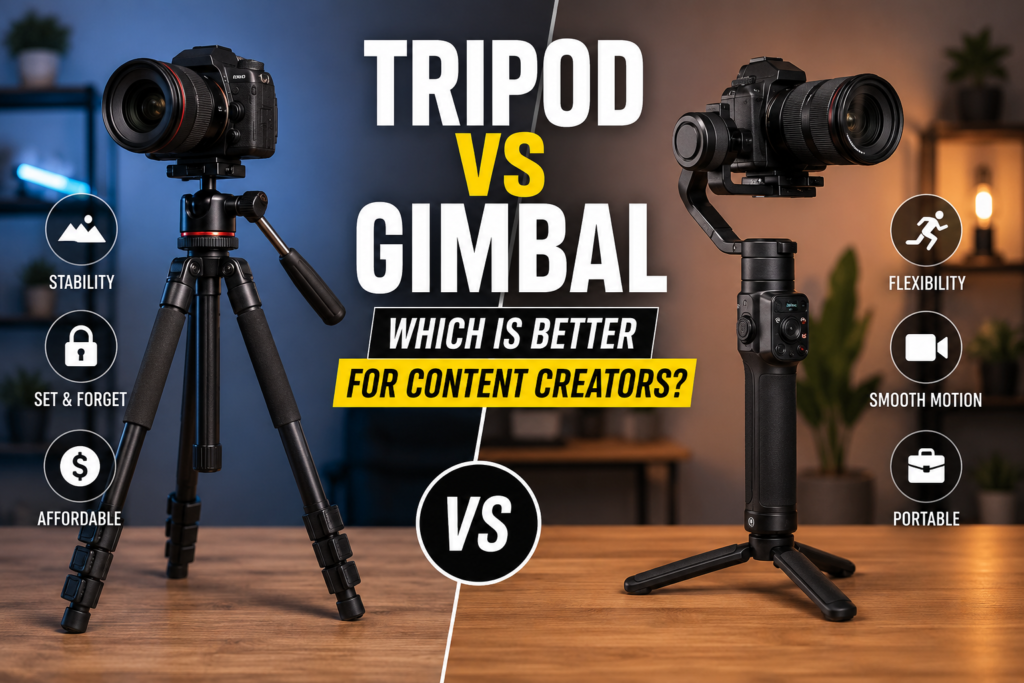
Should you buy a tripod or a gimbal?
Both tools help improve video quality, but they serve completely different purposes.
A tripod keeps your camera stable and fixed. A gimbal stabilizes your camera while moving. Understanding the difference between a tripod and a gimbal is essential if you create Instagram Reels, YouTube videos, travel vlogs, cinematic videos, or car content.
In this guide, we will explain:
- tripod vs gimbal differences
- which is better for content creators
- best tripod for creators
- best gimbal for iPhone creators
- best gimbal for cinematic videos
- when to use a tripod
- when to use a gimbal
- best setup for Instagram Reels and YouTube videos
This guide is optimized for creators searching for:
- best tripod for content creators
- tripod vs gimbal
- should I buy tripod or gimbal
- best gimbal for iPhone video
- best tripod for YouTube videos
- best camera stabilizer for reels
- tripod or gimbal for vlogging
What Is a Tripod?
A tripod is a three-legged support system used to keep your camera or smartphone completely stable.
Tripods are commonly used for:
- talking-head videos
- YouTube videos
- interviews
- podcasts
- product videos
- desk setups
- static Instagram Reels
A good tripod eliminates camera shake and creates professional-looking footage.
What Is a Gimbal?
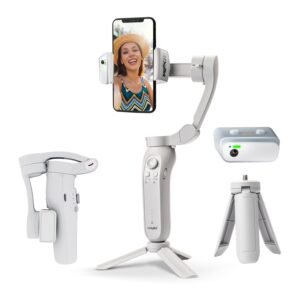
A gimbal is a motorized stabilization device that keeps your camera smooth while moving.
Gimbals are designed for:
- walking shots
- cinematic movement
- travel vlogs
- car shots
- action footage
- motion-heavy content
Modern gimbals use motorized stabilization technology to reduce shake during movement. Smartphone gimbals have become especially popular for cinematic mobile filmmaking and social media content.
Tripod vs Gimbal: Main Difference
| Feature | Tripod | Gimbal |
|---|---|---|
| Purpose | Keeps camera fixed | Stabilizes movement |
| Best For | Static videos | Moving cinematic shots |
| Movement | No movement | Smooth motion |
| Stability | Excellent when stationary | Excellent while moving |
| Battery Required | No | Yes |
| Beginner Friendly | Very easy | Learning curve |
| Best Use | YouTube, podcasts, interviews | Travel videos, cinematic reels |
| Portability | Moderate | Portable |
| Price | Usually cheaper | Usually expensive |
| Cinematic Movement | Limited | Excellent |
When Should You Use a Tripod?
A tripod is best when your camera stays in one place.
Use a tripod for:
- YouTube videos
- reaction videos
- podcasts
- desk setup videos
- product reviews
- tutorials
- livestreams
- zoom calls
- static reels
If you film indoors often, a tripod is usually more important than a gimbal.
When Should You Use a Gimbal?
A gimbal is best when the camera moves.
Use a gimbal for:
- walking shots
- cinematic Instagram Reels
- travel videos
- gym cinematics
- car cinematics
- tracking shots
- smooth motion footage
Creators use gimbals to achieve smooth cinematic movement that handheld shooting cannot replicate consistently.
🚶 Gimbal Advantages for Modern Video Content: Smooth Motion and Cinematic Output
A gimbal is ideal for creators who produce travel videos, vlogs, reels, or any content involving movement. It uses motorized stabilization to eliminate shakes while you walk, run, or move the camera dynamically. This creates smooth, cinematic footage that feels more engaging and professional. For social media platforms like Instagram and YouTube Shorts, gimbals help elevate storytelling by adding motion and depth that a tripod cannot provide.
⚙️ Ease of Use and Setup: Tripod vs Gimbal in Real Content Workflow
From a usability perspective, a tripod is much easier to set up and use, especially for beginners. You simply place it, adjust the height, and start recording. A gimbal requires balancing, calibration, and understanding of controls before use. While modern gimbals have become more user-friendly, they still demand a learning curve. For creators who value quick setup and simplicity, a tripod is more practical for daily shooting.
🔋 Battery Life and Maintenance: Practical Considerations for Creators
Tripods do not require power, making them extremely reliable for long shooting sessions without interruption. They are also low-maintenance and durable over time. Gimbals, however, rely on battery power and need regular charging. While they offer advanced stabilization features, they also require firmware updates, calibration, and careful handling. This makes tripods more dependable for long studio sessions, while gimbals are better suited for planned shooting workflows.
🎯 Content Type Decision: Which One Should You Actually Choose?
Choosing between a tripod and gimbal depends entirely on your content type and creative goals. If you primarily create tutorials, interviews, product demonstrations, or talking-head videos, a tripod is the better investment. If your content involves travel, walking shots, vlogging, or storytelling with movement, a gimbal will significantly improve your production quality. Many professional creators use both tools together to cover different shooting scenarios effectively.
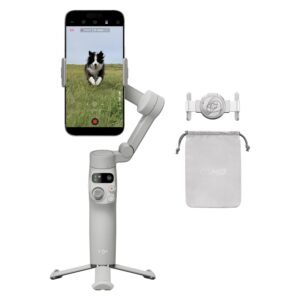
DJI Osmo Mobile 7 Gimbal Stabilizer for iPhone, Android
Best Tripod for Content Creators
If you want a tripod that works for smartphones now and mirrorless cameras later, choose a strong future-proof tripod.
Best Overall Tripod
Why it is great:
- strong aluminum construction
- stable for video shooting
- supports future mirrorless cameras
- excellent for YouTube and reels
Best for:
- content creators
- YouTube videos
- podcasts
- cinematic setups
Compare the Ulanzi vs Digitek Tripods: Which Is Better for Content Creators?
Best Gimbal for Content Creators
Best Smartphone Gimbal
Why creators love it:
- smooth cinematic stabilization
- easy tracking features
- portable design
- perfect for iPhone creators
Best for:
- cinematic reels
- travel content
- vlogging
- moving shots
DJI’s Osmo Mobile series is widely regarded as one of the best smartphone gimbal lines for creators and mobile filmmakers.
Do You Need Both a Tripod and a Gimbal?
For serious creators, yes.
A tripod and gimbal solve different problems.
Best Creator Workflow
Use tripod for:
- indoor content
- talking videos
- stable product shots
Use gimbal for:
- cinematic shots
- outdoor videos
- moving footage
Many professional creators eventually use both depending on the shooting situation.
Best Setup for Instagram Reels
If your content is mainly Instagram Reels:
Start with a tripod if:
- you film indoors
- you shoot talking videos
- you create tutorials
- you film desk setups
Buy a gimbal if:
- you create cinematic edits
- you shoot travel content
- you want smooth walking shots
Best Setup for YouTube Creators
For YouTube creators, a tripod is usually more important initially.
Most YouTube videos rely on:
- stable framing
- good audio
- proper lighting
A stable camera setup improves professionalism and viewer retention.
Tripod vs Gimbal for iPhone Creators
iPhone creators often benefit greatly from gimbals because smartphones are lightweight and easy to stabilize.
However, a tripod is still essential for:
- static filming
- livestreams
- talking-head videos
The best setup for iPhone creators is often:
- tripod + smartphone mount
- gimbal for cinematic shots
Find the Best tripod for content creators
🏆 Final Insight: Tripod vs Gimbal for Content Creators in 2026
In the debate of Tripod vs Gimbal: Which Is Better for Content Creators, there is no universal winner. A tripod delivers unmatched stability and simplicity, while a gimbal provides cinematic motion and creative flexibility. The best choice depends on your content strategy, budget, and shooting style. For most creators in 2026, using both tools strategically delivers the best overall results and helps maintain high-quality production across different types of content.
Final Verdict: Tripod or Gimbal?
The answer depends on your content style.
Buy a Tripod If:
- you create YouTube videos
- you shoot indoors
- you film tutorials
- you need stable shots
Buy a Gimbal If:
- you create cinematic reels
- you shoot travel content
- you want smooth movement
- you film while walking
Best Choice for Most Beginners
Start with a high-quality tripod first.
Then upgrade to a gimbal later for cinematic movement shots.
This gives creators the best balance of stability, flexibility, and long-term value.
Professional content creators often recommend mastering stable framing first before focusing heavily on cinematic movement tools.