
Introduction
Smart home technology has a reputation for being expensive — and honestly, some of it is. But buried beneath the flashy voice assistants and overpriced robot vacuums, there’s a growing category of gadgets that genuinely pay for themselves. These aren’t luxury items; they’re practical tools that quietly trim your utility bills, reduce waste, and cut down on costs you didn’t even realise you were racking up.
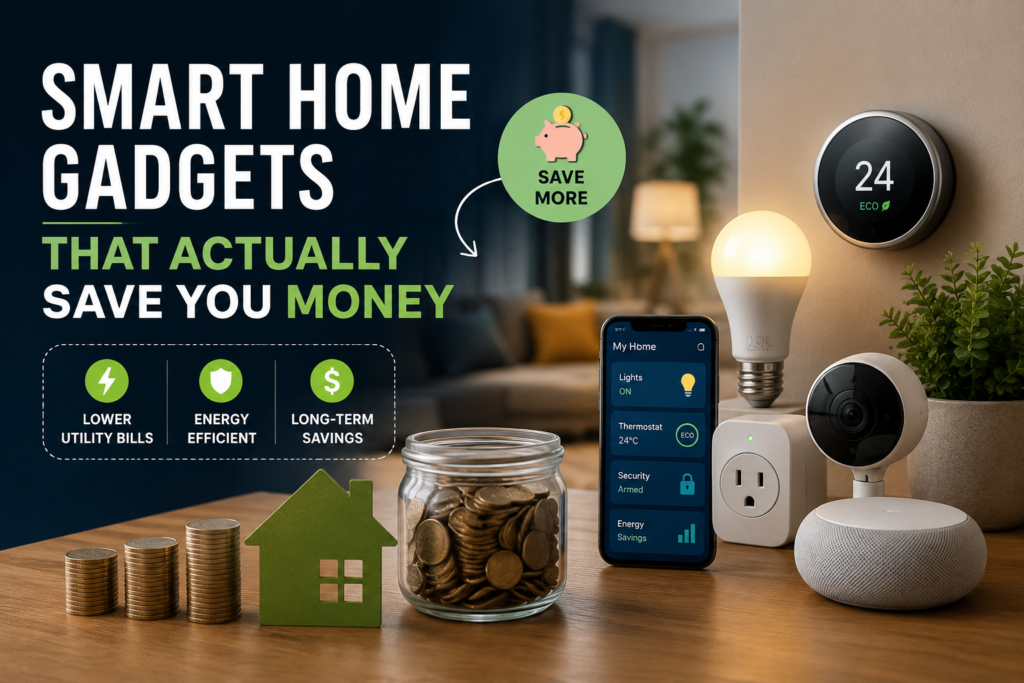
Smart Thermostats: The Biggest Bang for Your Buck
If you only buy one smart home device, make it a smart thermostat. Devices like the Google Nest or Ecobee learn your schedule, adjust temperatures automatically, and stop heating or cooling an empty house. Studies consistently show that households save anywhere between 10% to 23% on their heating and cooling bills after switching. Depending on your current energy costs, that can mean recovering the device’s cost within a single year.
The real magic is in the scheduling and remote control. Forgot to turn off the AC before leaving for a weekend trip? Two taps on your phone and it’s sorted.
Smart Plugs and Power Strips: Kill the Phantom Load
Most people don’t realise that electronics draw power even when switched off — this is called standby or phantom load, and it can account for up to 10% of your electricity bill. Smart plugs let you cut power to devices completely on a schedule or with a tap on your phone. Plug in your TV setup, gaming console, or home office equipment, set a schedule for overnight, and watch the savings add up over months.
They’re also among the cheapest smart home entry points, often costing less than ₹1,500–₹2,000 each, and they require zero technical setup.
Smart LED Bulbs: The Long Game
Smart bulbs cost more upfront than regular LEDs, but the combination of energy efficiency and automation makes them worthwhile over time. You can set them to automatically dim in the evenings, turn off if a room is unoccupied, or sync with sunrise and sunset times so you never accidentally leave lights on all day.
The bigger saving, however, is convenience-driven discipline — when turning off every light in the house is as easy as saying a phrase or tapping once, you actually do it.
Smart Water Leak Detectors: Preventing the Expensive Disasters
This one doesn’t save you money every month — it saves you from a potentially enormous bill all at once. A small sensor placed under your sink, near your washing machine, or beside the water heater will alert you the moment it detects moisture. Water damage repairs can run into the lakhs, and most of the time they stem from slow, unnoticed leaks. A ₹2,000 sensor is a very reasonable insurance policy.
Smart Irrigation Controllers: Stop Watering the Rain
If you have a garden, balcony plants, or a lawn, a smart irrigation controller connects to local weather forecasts and skips scheduled watering when rain is already on the way. It also adjusts watering duration based on season and soil moisture. The result is a meaningful reduction in water consumption — typically 30–50% less water used compared to a fixed timer system.
Smart Air Purifiers with Auto Mode: Only Run When Needed
Running an air purifier on full blast 24/7 is expensive and unnecessary. Newer smart models with auto mode use built-in air quality sensors to ramp up only when pollution levels rise — such as when cooking, after a dusty afternoon, or during high AQI days. The rest of the time, they idle quietly at minimal power. You get cleaner air without a bloated electricity bill.
What to Avoid: Smart Gadgets That Rarely Pay Off
Not every “smart” label translates into savings. Smart refrigerators, smart mirrors, and voice-activated coffee makers tend to cost significantly more than their regular counterparts with no meaningful financial return. If the primary feature is novelty rather than automation or efficiency, it’s probably not worth it from a savings perspective.
A good rule of thumb: if the smart version automates something you’d otherwise forget to do, or optimises consumption of electricity or water, it’s worth considering. If it’s just adding a screen or Wi-Fi to something that didn’t need it, skip it.
Final Thoughts
Building a smarter home doesn’t have to mean spending more. The gadgets that genuinely justify their cost are the ones working quietly in the background — adjusting temperatures, cutting phantom loads, catching leaks early, and reducing waste. Start with a smart thermostat or a few smart plugs, measure the difference in your bills over two or three months, and expand from there. The returns are real, and they compound over time.